
One of the most common misconceptions in investing is the idea that you can outsmart the market by timing your buys and sells perfectly. People often say, “Greg, I’ll just wait until the market dips before I invest,” or, “I’ll pull my money out and get back in when things look better.”
On the surface, it sounds logical. Who wouldn’t want to buy low and sell high? But in reality, this approach rarely works. That’s why at Beratung, we believe success comes not from timing the market, but from spending time in the market.
The Challenge of Timing the Market
Timing the market requires two nearly impossible feats:
- Knowing the perfect time to buy.
- Knowing the perfect time to sell.
Even professional investors who are paid to study markets every day rarely get both calls right. And even if you manage to guess correctly once, you have to be right twice. The odds simply aren’t in your favor.
On top of that, you’re battling human nature. Our emotions often get in the way, pushing us to sell when we’re scared and buy when things feel “safe” again—usually the opposite of what actually builds wealth.
A Clock Analogy for Market Cycles
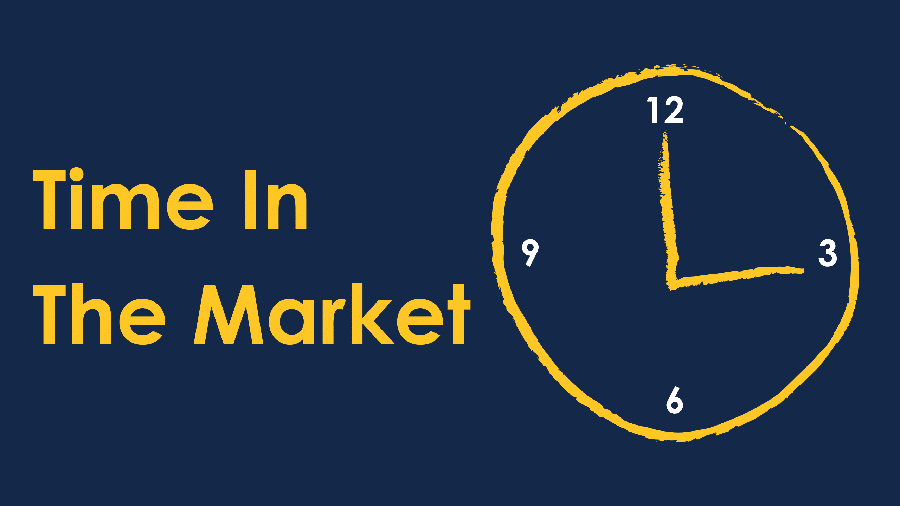
I often explain market cycles using a clock. Imagine the market at its highest point at 12 o’clock and its lowest at 6 o’clock. The hours between represent the cycle as the market moves from peaks to troughs and back again.
- From 12 to 3, the market starts to fall.
- From 3 to 6, losses accelerate until the trough.
- From 6 to 9, the recovery begins.
- From 9 to 12, the market climbs back to its peak.
Here’s the key: market downturns and recoveries usually happen much faster than we expect. Losses tend to come quickly, and recoveries often bounce back just as fast. If you’re sitting on the sidelines waiting for the “perfect moment,” chances are you’ll miss it.
Why Time in the Market Wins
When you zoom out and look at long-term investing—decades instead of days or weeks—market cycles smooth out. Every downturn is followed by a recovery. Over time, the general trend of the market has been upward, rewarding those who stayed invested instead of trying to jump in and out.
That’s why systematic investing, staying disciplined, and letting compounding work for you is so powerful. By keeping your money in the market, you don’t have to guess when the next high or low will happen—you participate in all of it, capturing the long-term growth.
Putting Emotion in Check
Timing the market doesn’t just require skill—it requires perfect emotional discipline. Most people sell during fear-driven downturns (between 3 and 6 on the clock) and buy back in during euphoric peaks (between 9 and 12). In other words, they end up doing the exact opposite of what leads to success.
That’s why at Beratung, we believe having a financial plan is critical. A plan keeps you grounded when emotions run high. It gives you a framework to stick with your strategy, even when the headlines make you want to do the opposite.
The Bottom Line
Market cycles are inevitable. What matters most isn’t predicting them—it’s how you respond to them. History shows us that investors who stay disciplined, stay invested, and focus on time in the market consistently come out ahead of those who try to time every twist and turn.
If you’d like help building a financial plan that keeps you disciplined and focused on long-term growth, we’d love to talk with you.